Movement - our Theme for March
Our February theme, Emotion, didn’t quite take off — and that’s probably my fault. I announced it late and didn’t give you much direction. So this month we’re starting early and thinking it through together.
March Theme: Movement
Movement is everywhere in photography. Sometimes obvious. Sometimes implied. Sometimes frozen. Sometimes blurred.
Looking back at my own photographs from the past week, I noticed that motion blur has crept in repeatedly — long exposures in Bath, people dissolving into historic stone, the temporary against the permanent. But blur is only one way to show movement.
Let’s explore this more widely.
1. Motion Blur – The Classic Approach
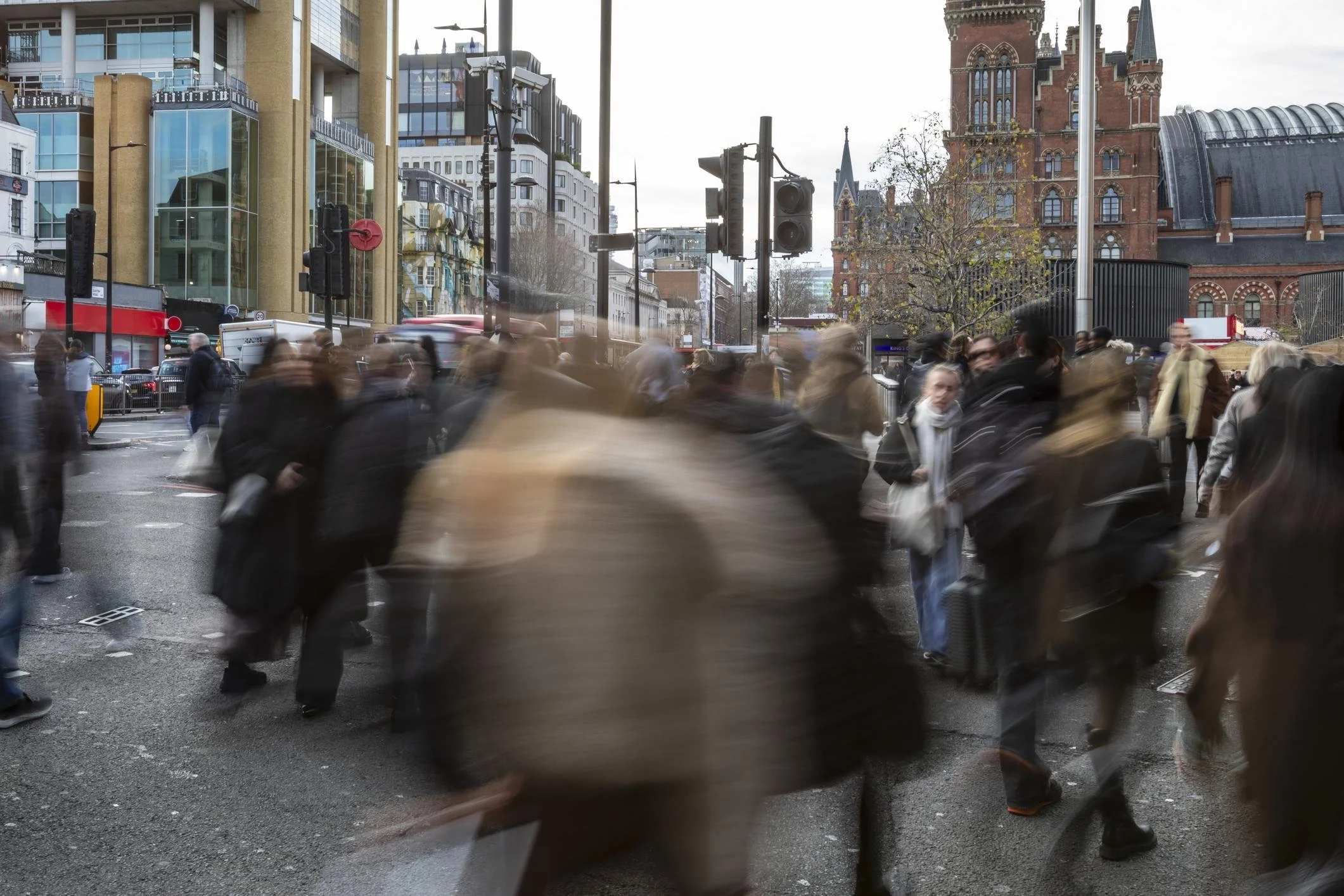
AI generated, large group of people with motion blur on a busy pedestrian crossing
Blur can suggest:
Speed (panning with a cyclist or car)
Passage of time (crowds flowing through a fixed frame)
Energy (children running, dogs racing)
Calm continuity (water, clouds)
Techniques to try:
Slow shutter speeds (1/10 – several seconds)
Panning with your subject
Tripod for stability
Neutral density filter for daylight experiments
But don’t stop there.
2. Freezing the Peak of Action

AI generated - dog caught in mid leap.
Ironically, freezing movement can make it feel more dramatic than blur.
Think:
A dog mid-leap
A water droplet suspended
A footballer at full stretch
A fleeting expression
A fast shutter (1/1000 or faster) can reveal moments the eye never truly sees.
3. Implied Movement – The Subtle Approach

AI Generated Tyre Tracks
Movement doesn’t need a moving subject.
It can be suggested by:
Footprints in sand
Wind-blown grass
A coat caught mid-swing
Repetition and leading lines
Juxtaposition of permanent and temporary
Sometimes the still frame hints at what has just happened — or what is about to happen.
4. Movement as Concept
Movement can also be:
Emotional change
Journey
Growth
Decay
Transition
Social movement
The rhythm of everyday life
It doesn’t have to be literal.
A Gentle Challenge
Try to avoid simply photographing “something blurry.”
Ask yourself:
What is moving?
Why does it matter?
What story does that movement tell?
Would freezing it be stronger than blurring it?
Movement is one of photography’s paradoxes. We work in still images — yet we can make them feel alive.
I’m looking forward to seeing where you take this. Let’s make March a lively month.