Featured Photographer: Lee Frost
London in Black and White
My own interest in black and white photography led me to Lee Frost’s London images, several of which I shared at our recent club meeting. What struck me was the precision: carefully balanced compositions, beautifully controlled tones and long exposures that transform familiar views into something rather special.
Frost is a photographer, writer and experienced photography tour leader. His work covers a wide range of subjects and destinations, but it was these London photographs that made me stop and look more closely. You can read about his background on [his website](https://www.leefrost.co.uk/profile).
A Place for Everything
Lines that lead the eye
© Copyright 2026 Lee Frost Photography
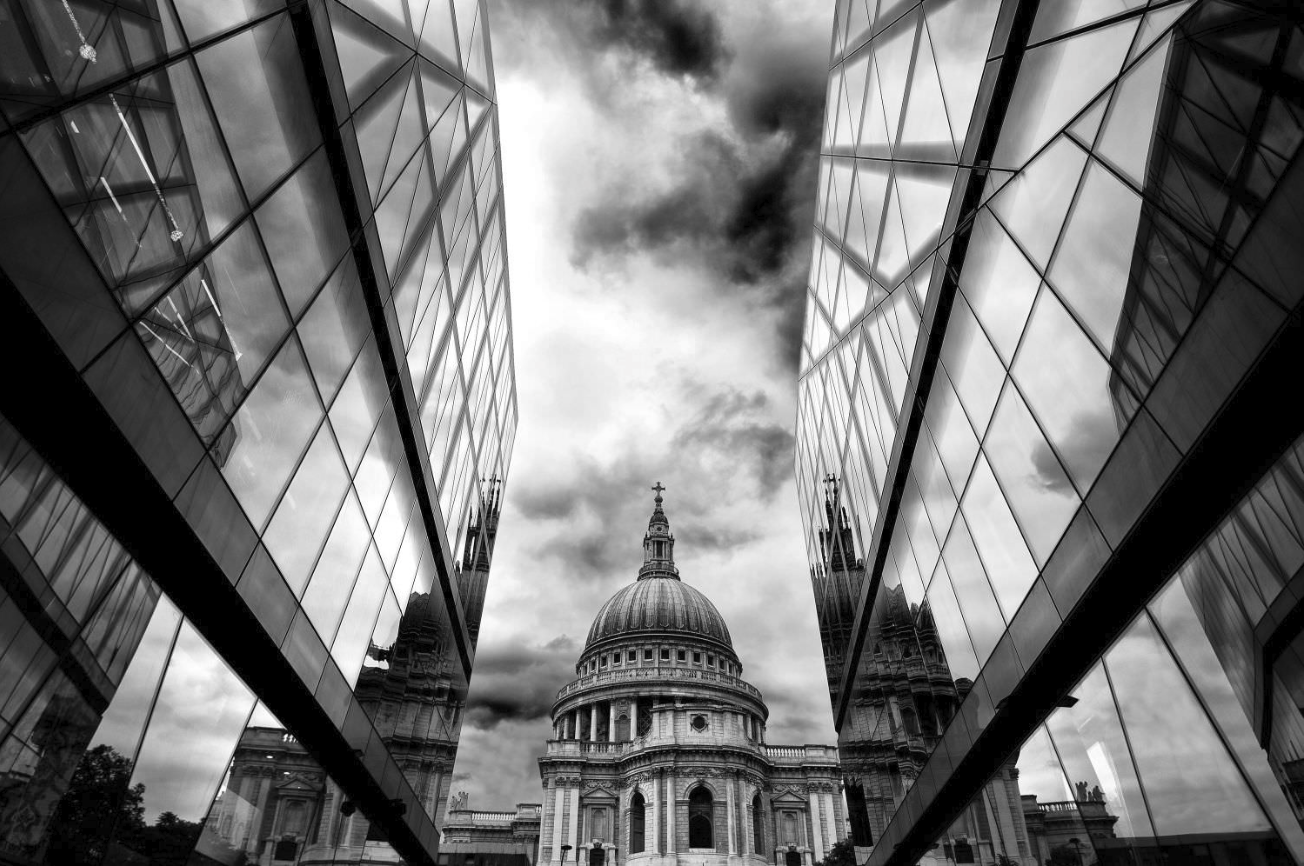
Look at the photograph of St Paul’s framed between modern glass buildings. The dome sits neatly in the opening, while the surrounding lines draw our eyes towards it. Reflections add another layer of interest. The viewpoint is doing a great deal of the work here: a small shift to either side would change the balance.
© Copyright 2026 Lee Frost Photography
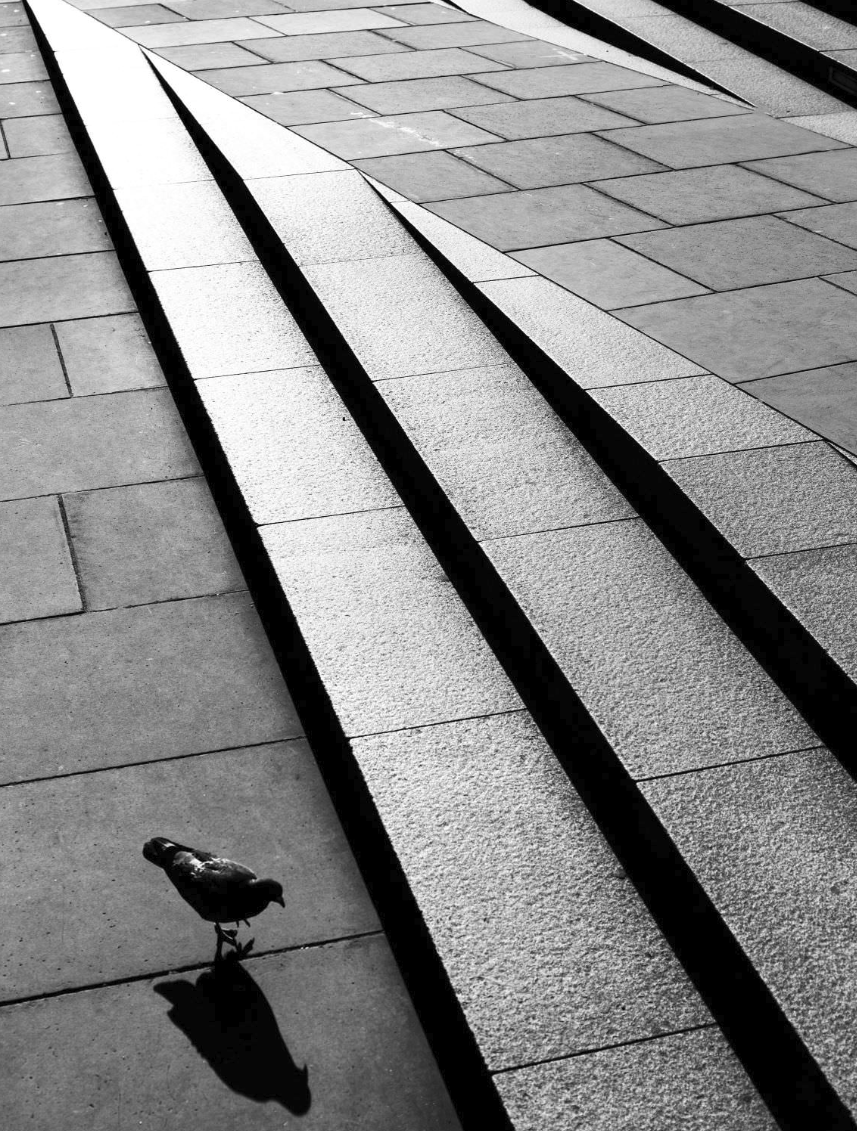
The steps and pigeon photograph is much simpler, but just as carefully composed. Strong diagonals and dark shadows create a bold pattern, while the pigeon and its shadow give us something to settle on. It’s a useful reminder that we don’t always need a grand subject. Ordinary paving and good light can offer plenty.
One person makes the picture
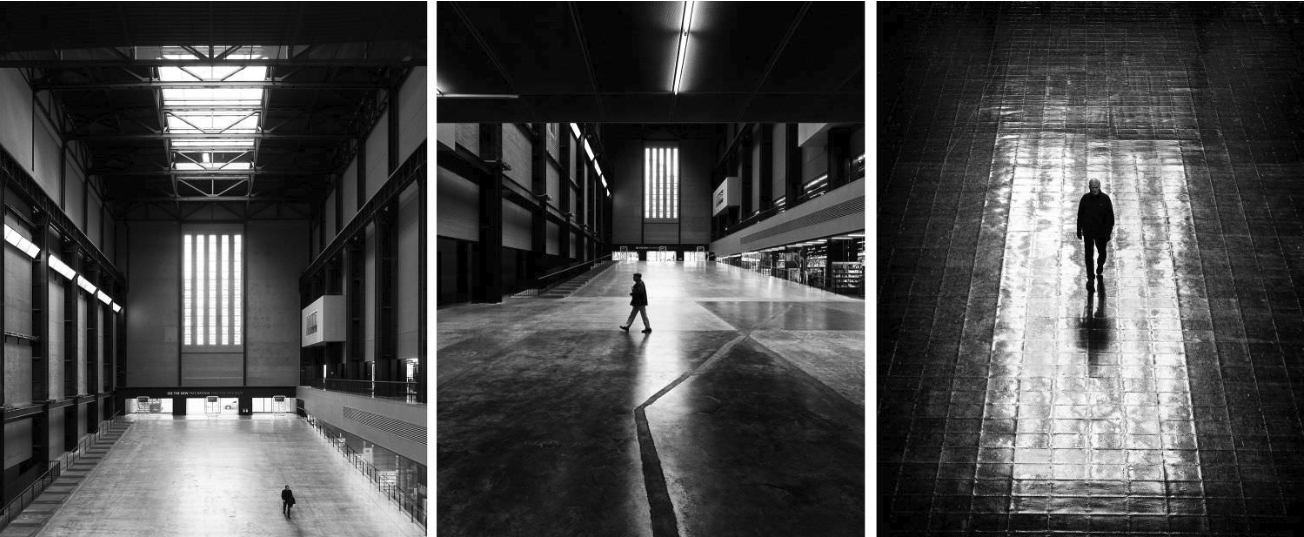
The photographs of Tate Modern’s Turbine Hall particularly caught my attention. In each, a single figure gives the enormous space a sense of scale and provides a clear focal point.
© Copyright 2026 Lee Frost Photography
To my eye, these are deliberately constructed pictures. The figure’s position matters just as much as the architecture. Whether achieved by directing someone or waiting for the right moment, that relationship is what makes the composition work. There’s a lesson here in choosing the frame first, then being patient enough for the final element to fall into place.
Giving Time a Role
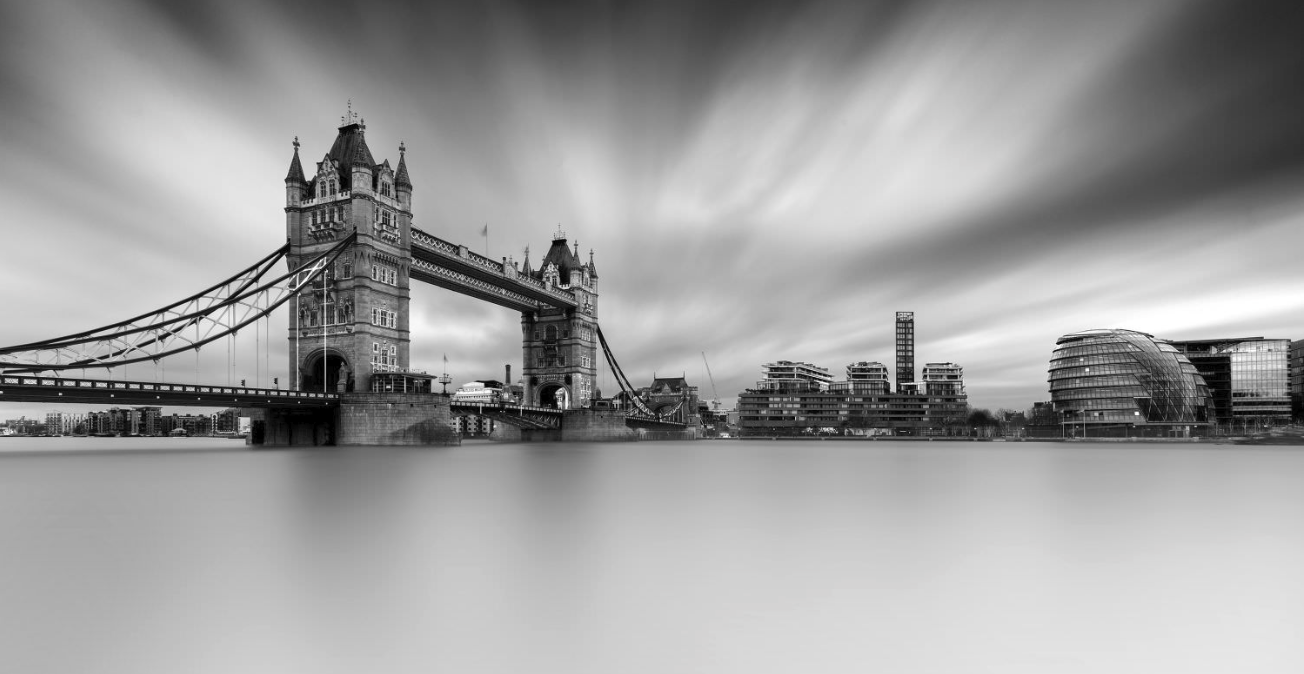
In the Tower Bridge photograph, the smooth river and streaked clouds contrast with the crisp, solid structure of the bridge. The long exposure simplifies a busy scene and gives it a surprisingly quiet atmosphere.
© Copyright 2026 Lee Frost Photography
During a long exposure, moving water and clouds blur while stationary buildings remain sharp, provided the camera is held steady. Here, the effect supports the composition: the softened surroundings let the architecture stand out.
More Than Removing Colour
The quality of the black and white treatment is another attraction. There are rich blacks, luminous highlights and plenty of grey tones between them. Stone, glass, water and cloud each retain their own character.
In the Natural History Museum interior, light picks out the windows, stairs and central statue while the darker surroundings create depth. My eye moves through the photograph because of those changes in brightness.
For our own conversions, that’s a useful question to ask: where does the eye go first, and is that where we want it to go?
Explore more in Lee Frost’s portfolio (https://www.leefrost.co.uk/portfolio), including his London and black and white galleries.