- untouched 13
- Photo library management 5
- Artificial Intelligence (AI) 4
- featured photographer 4
- Camera Settings 3
- Essential IT Skills 3
- camera technique 3
- iPhone 3
- Monthly Themes 2
- Post Production 2
- Software 2
- composition 2
- photo sharing 2
- photographers 2
- Camera Controls 1
- Flickr 1
- General Interest 1
- Photobook 1
- Photography Thoughts 1
- challenges 1
- meetings 1
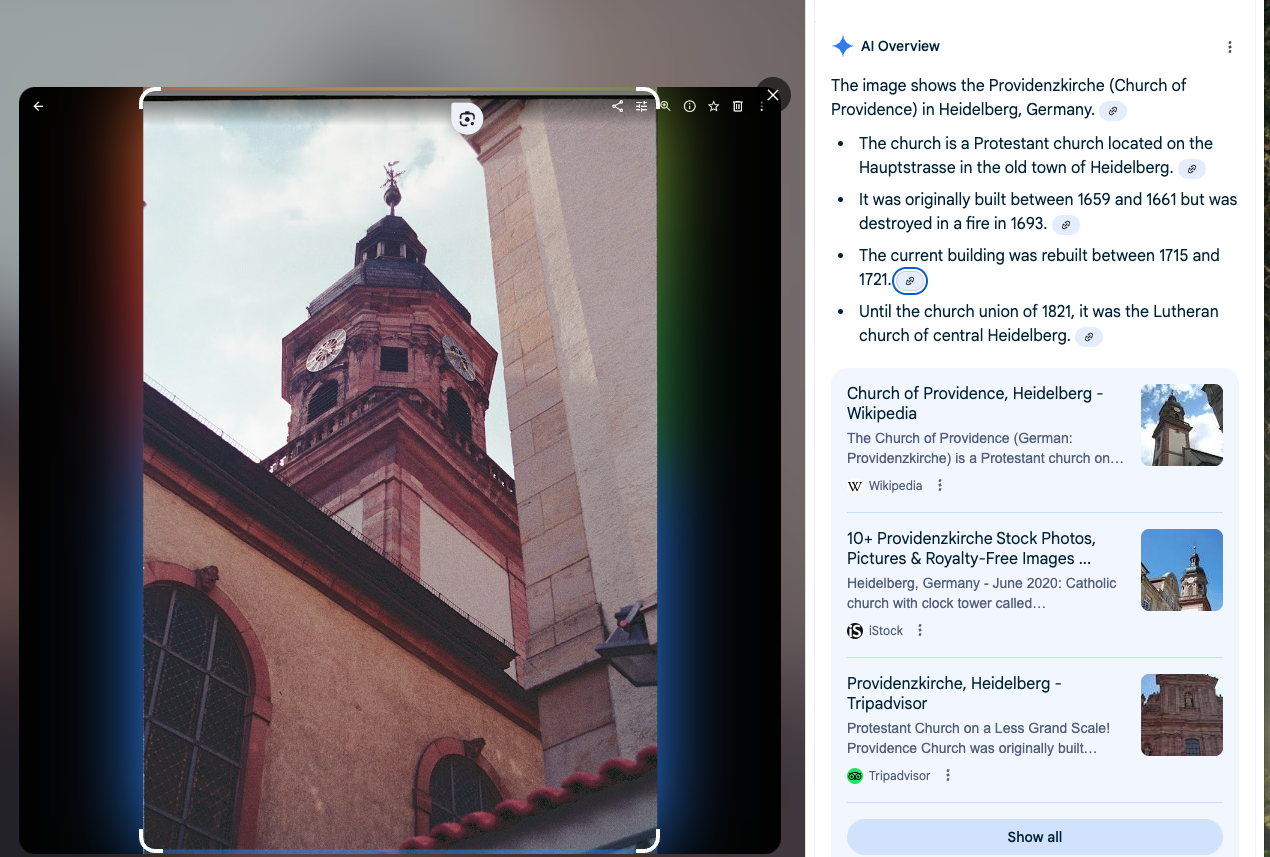
Where is that?
🗺 Where Is That?
Digitising old photos often raises the question — where was that taken? Google Lens, built into Google Photos, can identify locations, landmarks, and even restaurant signs from decades-old shots. In my examples, from Gruyères in Switzerland to the Providence Church in Heidelberg, it’s a simple way to rediscover the forgotten stories behind your images.
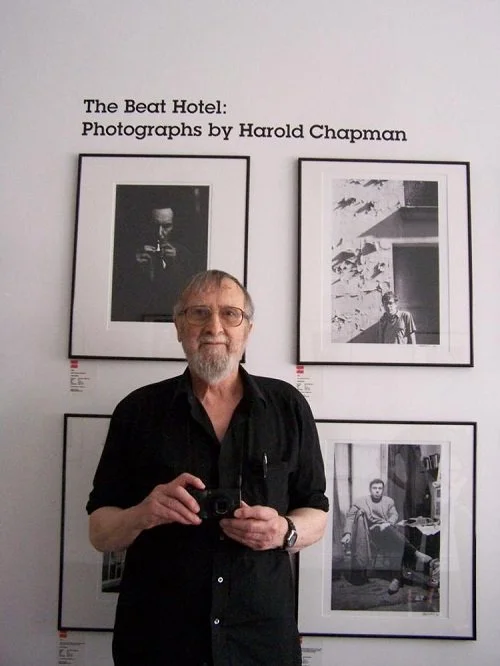
Photographer of the Week: Harold Chapman
This week’s spotlight is on Harold Chapman, the British photographer who lived among the Beat poets in Paris from 1957 to 1963. His book Beats à Paris captures life inside the legendary Beat Hotel—an intimate, unvarnished portrait of Ginsberg, Burroughs, and their circle. Chapman’s quiet, documentary style reveals a vanished world of creativity, chaos, and cigarette smoke, reminding us how powerful photography can be when the photographer becomes part of the story.

My Photography has matured, looking back at the 1990s.
A nostalgic look back at my 1990s photo albums from our time in Germany, when film ruled and every exposure counted. Scanning those old negatives reminded me how much my photography has changed—from simply recording memories to seeing the world with a more creative and reflective eye.

Get New WGPC Posts Without Me Rewriting Everything
This may sound like a foreign language but please bear with me as I explain changes to our weekly email.
This blog post explains changes in how I share WGPC news to make it easier to produce and, I hope, better for you.
This weekly email will now highlight new posts from the WGPC blog instead of repeating full articles. The blog will become a searchable, printable archive, and you can get instant alerts for new posts by installing the free Feedly app and connecting it to our blog feed.

Organising Your Photos with Google Photos
This week’s article shows how to use Google Photos to manage and organise your images. You’ll learn how to create albums for events or projects, search by people or objects, and share your albums in full quality—without worrying about file size or compatibility.

Preserve Your Pixels
We invest in high-resolution cameras, but too often throw away pixels without realising it. Google Photos, iCloud, email and messaging apps can all shrink your images. For A4 prints you need originals, not compressed copies. Our latest blog explains how to preserve your pixels and make sure your photos are exhibition-ready.

Why DxO Nik Collection 8 Deserves a Place in Your Editing Toolkit
Software Spotlight: DxO Nik Collection 8
I’ve been using Nik Efex for most of my black & white editing. It offers an excellent balance of quick presets and fine manual control, plus powerful local adjustments. Unlike Adobe’s tools, it’s a one-off purchase rather than a subscription, and I find working on a computer screen far more effective than using a mobile device.
If you’re considering photo editing on your computer, I recommend giving it a try.

Photographer Review: Simon Ellingworth
A review of Simon Ellingworth, whose RPS Mono Vision workshops challenge photographers to strip away colour and focus on light, form, and intent. Having completed Levels 1 and 2 (and signed up for Level 3), I reflect on how his teaching—encouraging both discipline and experimentation—has shaped and deepened my monochrome practice.

Werner Bischof: Unseen Colour and the Tricolour Camera
Our visit to Lacock’s Unseen Colour exhibition revealed Werner Bischof’s pioneering use of the tricolour separation camera. Unlike earlier methods requiring three separate exposures, this ingenious prism-based system recorded red, green, and blue negatives simultaneously, later recombined into vivid colour images. The process produced extraordinary quality but demanded heavy equipment and meticulous alignment. Bischof’s rare colour work shows both his technical curiosity and creative vision, reminding us how early innovations underpin today’s digital RGB photography.

Seeing Faces Everywhere
Sue W’s photo of water pipes in the Victoria Art Gallery (with pencilled-in faces lovingly restored after redecoration) is a perfect example of pareidolia—the human tendency to see faces in everyday objects. Read more in this University of Washington blog article and start spotting your own.

Autumn Colours?
A much-loved old cherry tree, difficult to photograph in its village setting, is shown here in three versions: the flat RAW capture, a colour edit with boosted autumn tones, and a black-and-white conversion. Which speaks more — the seasonal spectacle or the stark dignity of form and texture?
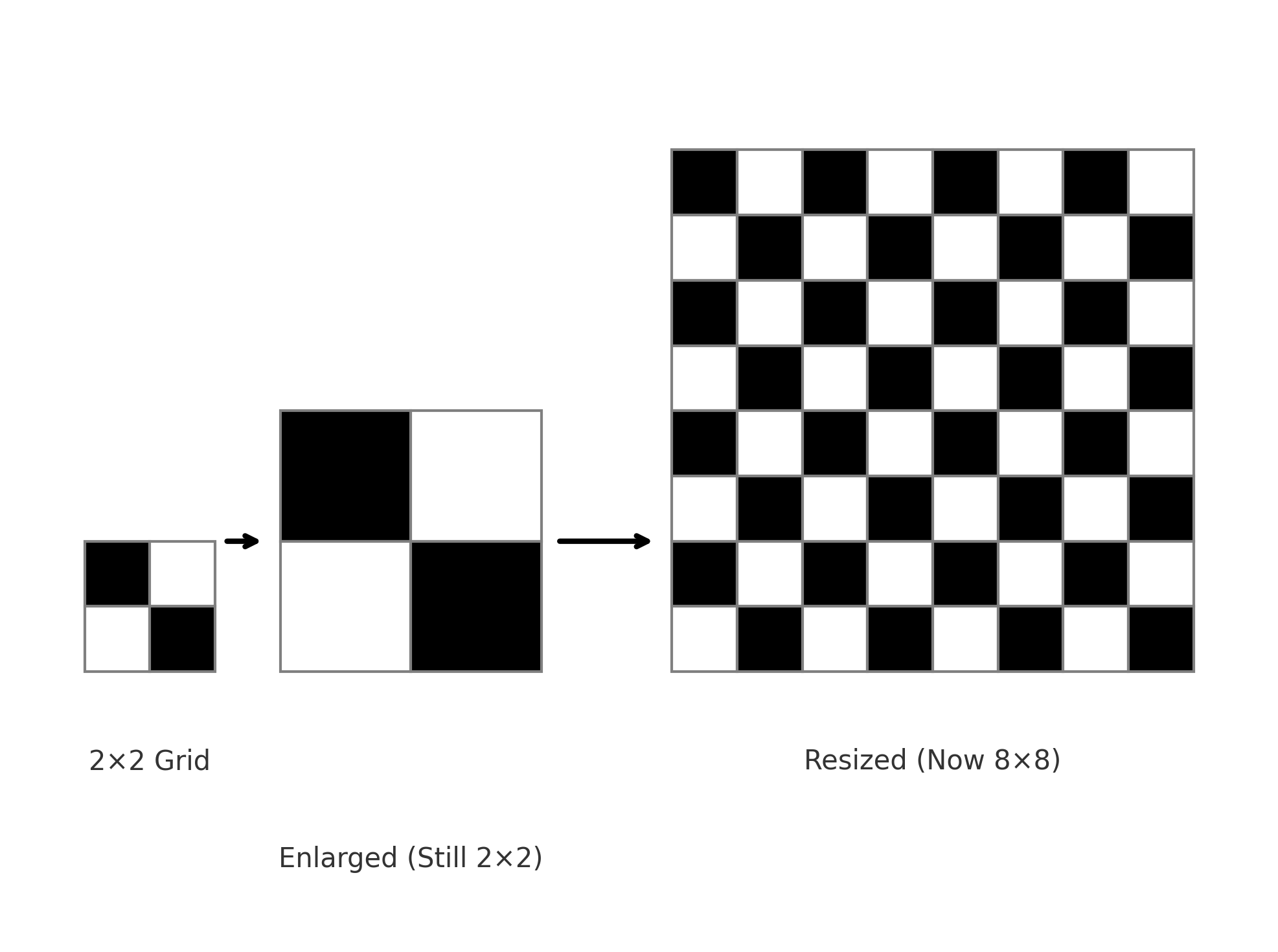
📸 Understanding Enlargement vs Resizing
Confused about file size, resolution, cropping, and resizing? This post explains the difference using a simple chessboard illustration. Learn why enlarging an image doesn’t improve its quality—and what resizing really means.
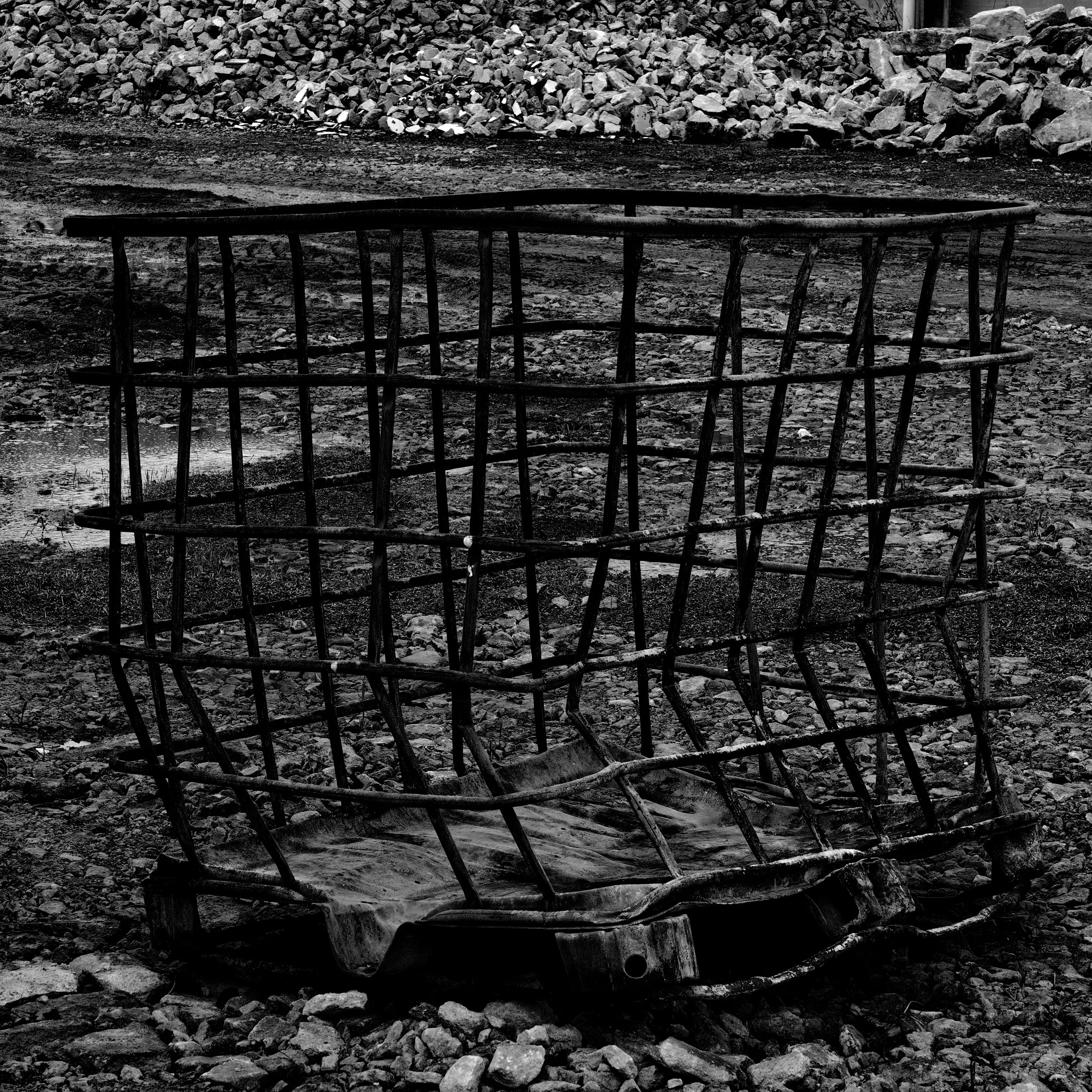
At the Junkyard - a project Inspired by the work of Ray Metzker
At the Junkyard – A Ray Metzker-Inspired Mono Project
This blog explores how a visit to the Wadswick Farm junkyard became a creative exercise in minimalist, high-contrast photography inspired by Ray Metzker. Five black-and-white images show how light, shadow, and repetition can transform the ordinary into the abstract.

📘 Preparing Photos for the WGPC Exhibition Book
As we prepare the WGPC exhibition book, it’s vital to ensure your photo files are large enough for high-quality A4 printing. This article explains the minimum resolution and file size needed, and includes step-by-step instructions for checking image size on Windows, Android, and iOS—plus essential tips for iPhone users to make sure their uploads are compatible with Google Photos.
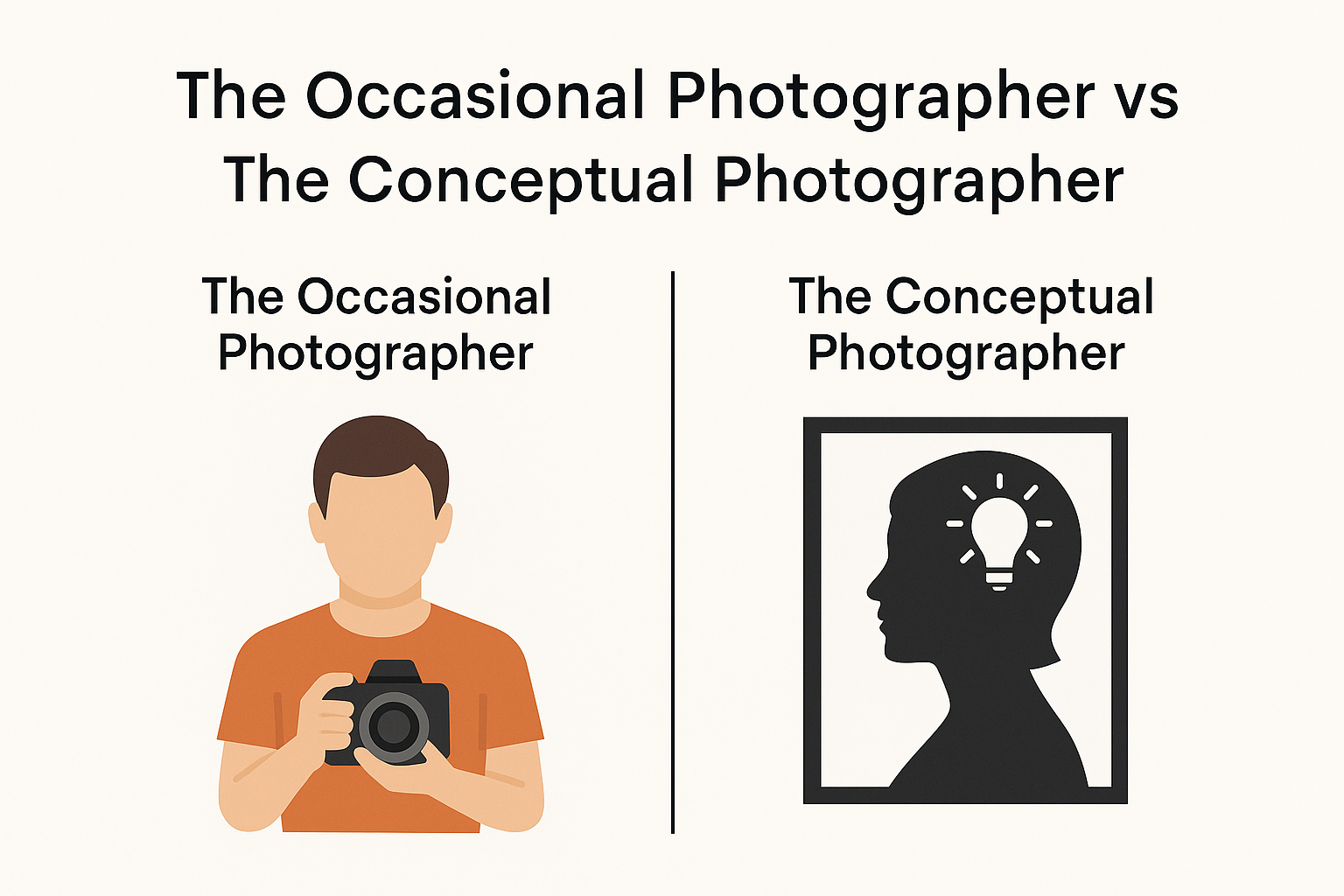
The Occasional Photographer vs The Conceptual Photographer
Are you an occasional photographer or a conceptual one? This blog post compares the spontaneous, memory-led approach with the idea-driven, intentional style of photography—and encourages you to reflect on where you sit along the spectrum.
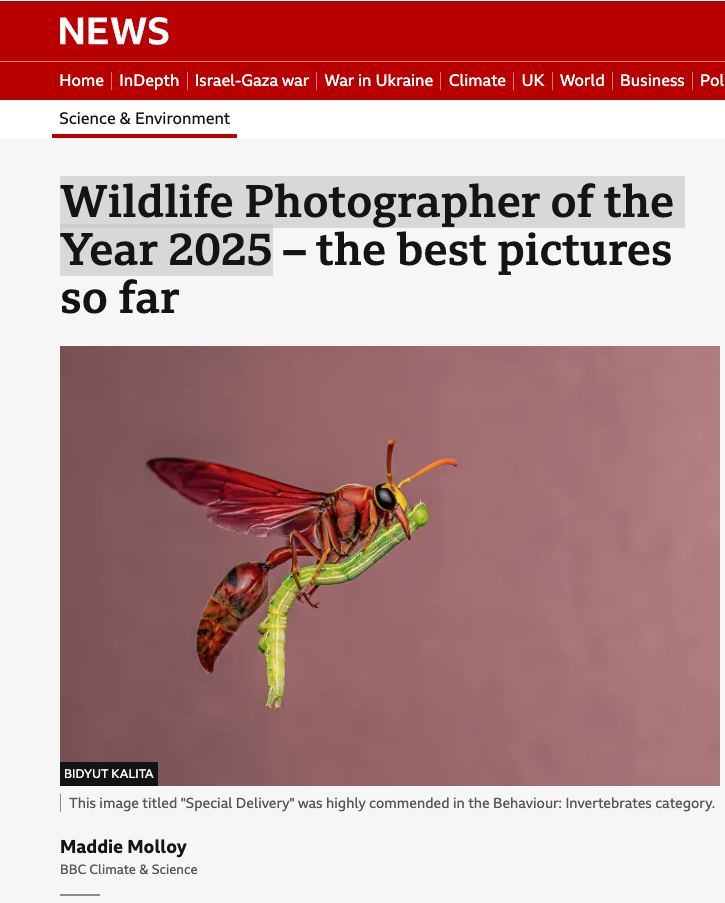
Wildlife Photographer of the Year 2025
Thank you to Sue W for pointing us at this BBC article about the Wildlife Photographer of the Year competition. They all knock my many hare photos “out of the park”!
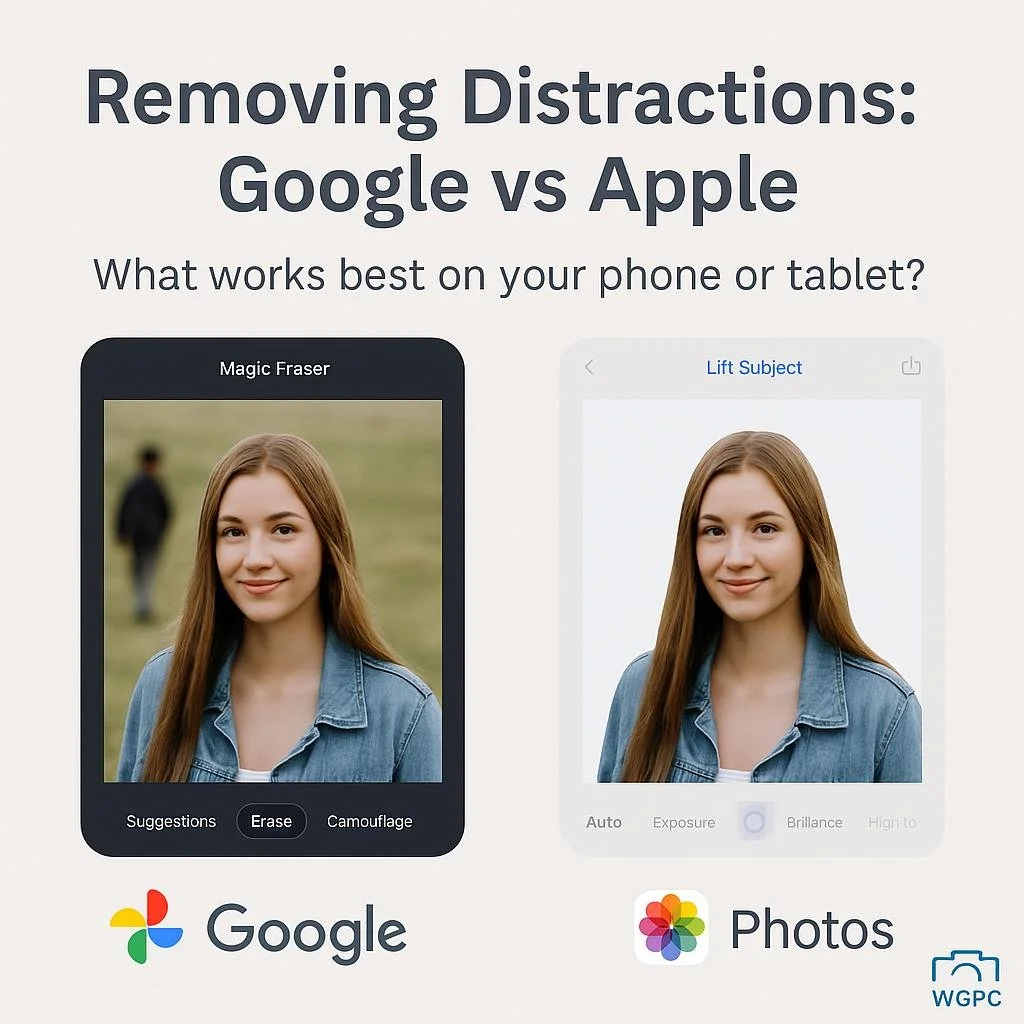
Removing Distractions from Your Photos — Google vs Apple
Google Photos’ Magic Eraser is a brilliant way to remove distractions—but it requires a paid subscription (£18 per year). Apple’s equivalent tools are emerging, but only on the latest hardware/software combinations. For many of us it is only Google Photos or third-party apps like Snapseed (Google) or Photomator (Apple). Here’s what works best on your device now.
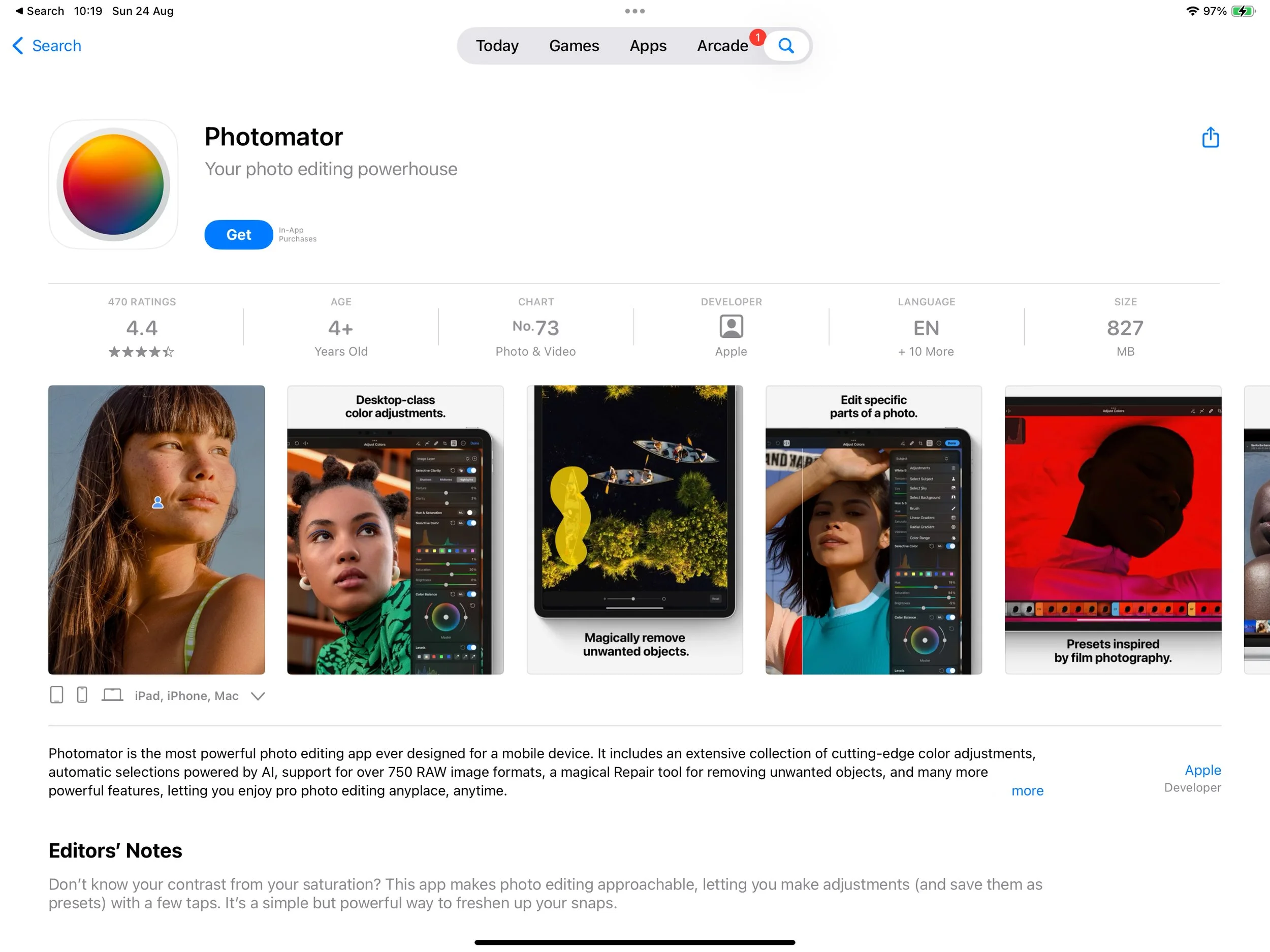
Introducing Photomator – Apple’s New Photo Editing App
Apple has released Photomator, a new editing app that bridges the gap between Apple Photos and pro tools like Photoshop. It offers one-tap enhancements, RAW support, and layer-based editing, all synced across iPhone, iPad, and Mac—ideal for refining your WGPC uploads.
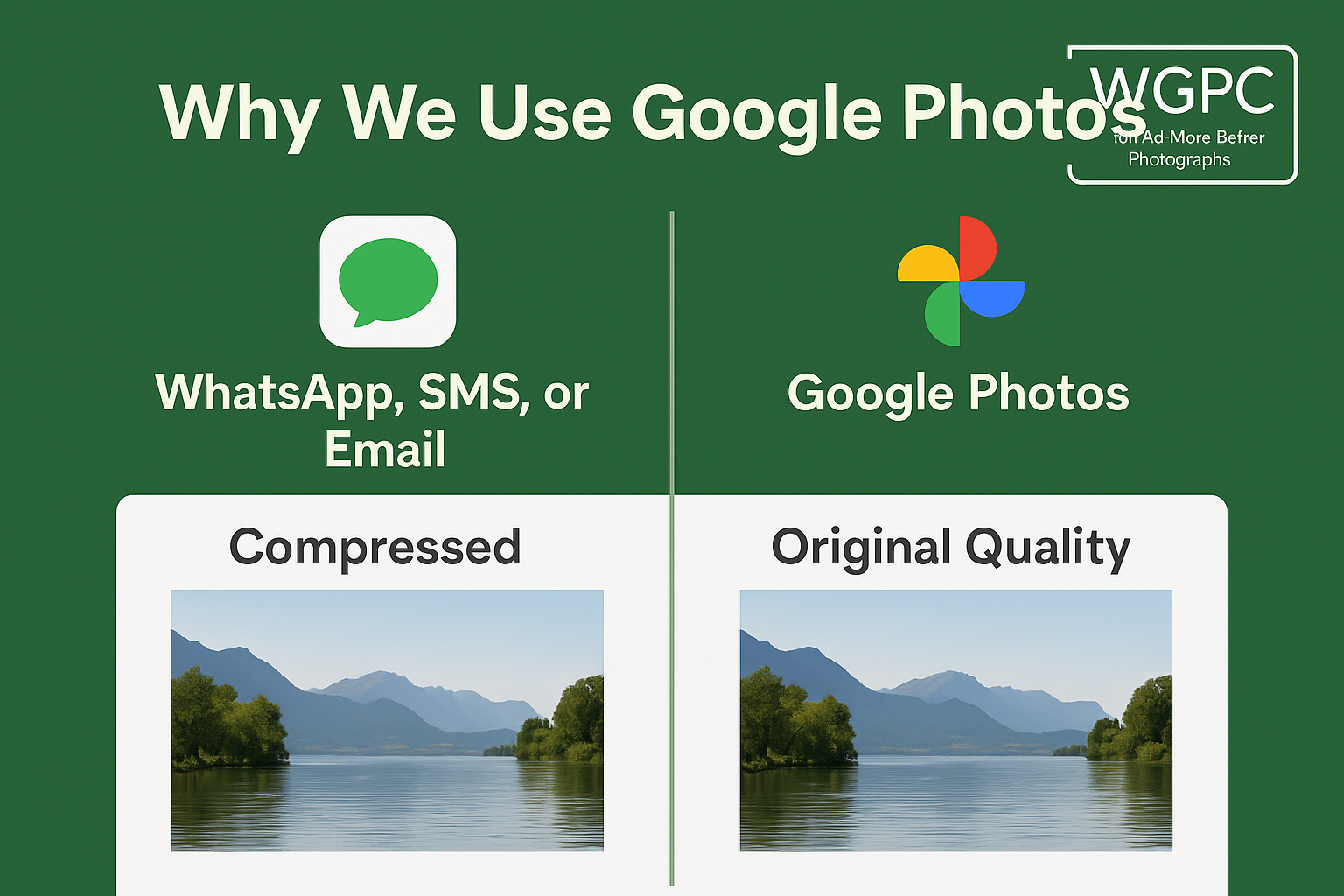
Why We Don’t Use WhatsApp, SMS, or Email
Why doesn’t WGPC accept photos by WhatsApp, SMS or email? Because these methods downgrade quality, strip essential metadata, and make image organisation nearly impossible. In this blog post, I explain why Google Photos is the club’s standard platform—for sharing, learning, and preparing for print exhibitions—and how it helps ensure your work is shown at its best.